

[ad_1]
Manufacturing is having a resurgence in the US — and with it comes a massive demand for talent. The industry is expected to add 3.8 million jobs over the next decade, but because of a wave of Baby Boomer retirements and a widening skills gap, as many as half of those roles could go unfilled.
The challenge isn’t just filling roles. There is a real need for workforce development and helping employees build skills that support their goals today and into the future. And for manufacturers, investing in talent pays off. According to Deloitte, employees who believe they’re gaining valuable skills are 2.7 times less likely to leave their jobs.
Rethinking workforce development
US manufacturers can’t afford to be passive in the wake of such a significant talent shortage. It will take proactive and innovative approaches to cultivate workers for skilled roles. This includes lowering the barrier to entry for people who have never set foot in a factory and rethinking how training is done from day one.
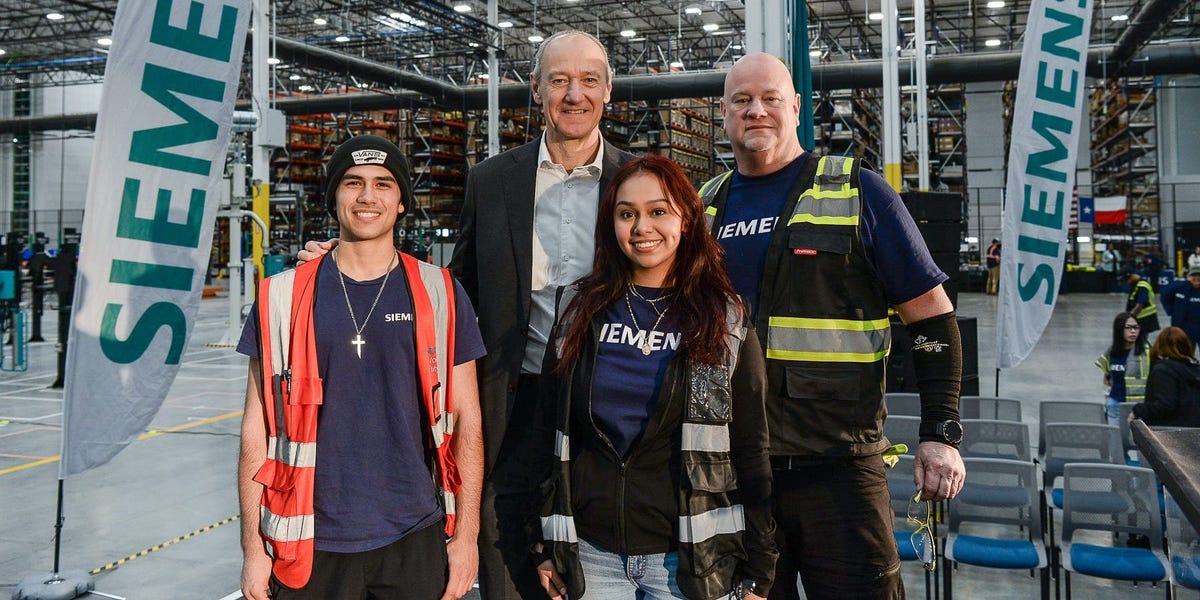
Siemens is one company leading that charge. The global technology company recently opened a 500,000-square-foot facility in Fort Worth, TX where it produces switchboards needed to electrify AI data centers. The plant has already brought 480 new jobs to the region, with plans to create more than 800 by 2026.
Siemens
But hiring at that scale requires a new playbook. Siemens knew it couldn’t rely solely on traditional on-the-job training, so it took an unconventional route: bringing in educators.
“We hired former teachers and school administrators and had our subject matter experts teach them the content so they could build a training curriculum,” said Dr. Khourie Jones, Siemens training manager for the Fort Worth facility and former educator.
Turning high school grads and pizza delivery drivers into manufacturing leaders
To meet hiring needs, Siemens cast a wide net and put less emphasis on manufacturing experience. Instead, the company focused on soft skills: a willingness to learn, a strong work ethic, and a growth mindset.
“If you come in with those things, then we’re able to equip you with the skills to be successful in the manufacturing plant,” Jones said. “We’ve hired a former chef, someone who was delivering pizzas, and a young person right out of high school. All of them have quickly become high-performers and leaders at the plant.”
Siemens
The successes of these individuals is thanks in part to a new training model built around how people actually learn. New hires go through a four- to five-week program that starts with classroom learning, moves into a hands-on lab, and finishes with shadowing on the factory floor.
“We were careful to consider all learning styles and make the classroom engaging when building our curriculum,” Jones said. “Many employees happen to be hands-on learners, so they thrive in the latter stages of the training when they can apply the book learning.”
Good training gets results
As a result of the new training approach, Siemens has seen growth from day one in each trainee and higher-than-expected retention rates among employees. The new training model has been so successful that the company now plans to roll out similar training programs at other facilities nationwide.
But it’s not just about curriculum, it’s also about culture.
“People often think of warehouses as gloomy and boring,” Jones said. “We prioritize building a positive and energetic environment that encourages workers to see their career opportunities as endless.”
The bigger picture? By swapping rigid requirements for teachable skills and designing training that meets workers where they are, Siemens is redefining what it takes to thrive in modern manufacturing. The goal is simple: Make it easier for anyone — from any background — to step into a meaningful career.
Learn more about how Siemens is providing the critical underpinnings for America’s growing industry and infrastructure.
This post was created by Insider Studios with Siemens.
[ad_2]
Source link
