

[ad_1]
Millions of student-loan borrowers could see major changes to their repayment plans under the Senate’s new education spending proposal.
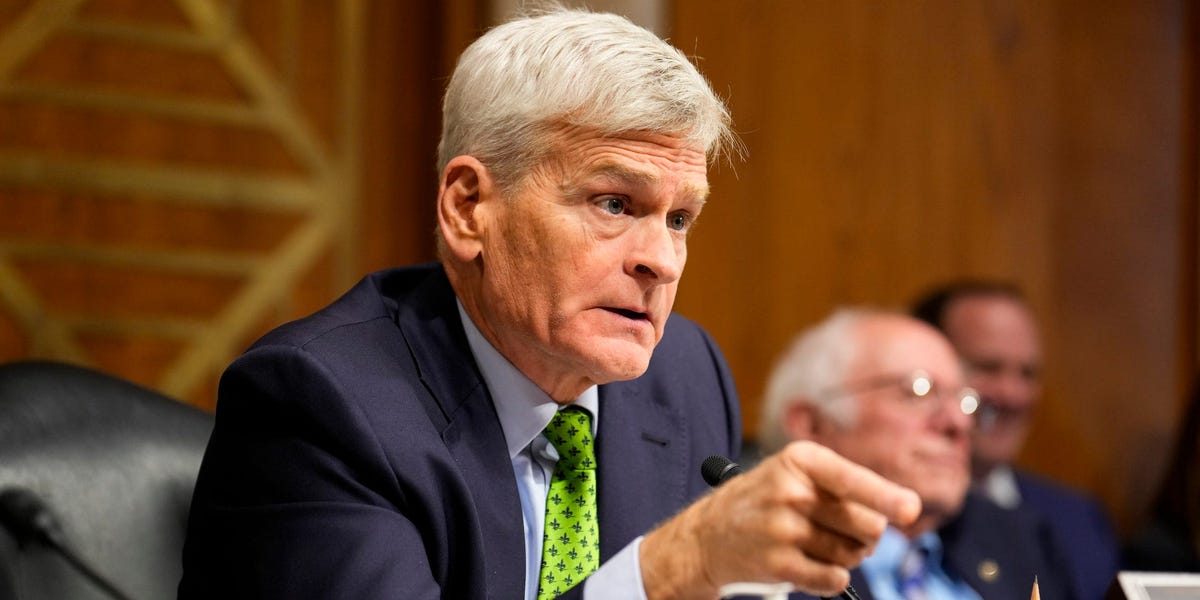
On Tuesday, Sen. Bill Cassidy — chair of the Senate education committee — unveiled the education portion GOP lawmakers are seeking to include in President Donald Trump’s spending bill.
After the House passed its version of the sweeping spending legislation in late May, the Senate is now moving forward with its own amendments to the legislation before aiming to get it passed this summer. Some elements of the legislation are the same as the ones that the House passed, like condensing existing income-driven repayment plans, while other areas, like caps on loans for parents and graduate students, have changed.
“We need to fix our broken higher education system, so it prioritizes student success and ensures Americans have the skills to compete in a 21st century economy,” Cassidy said in a statement. “President Trump and Senate Republicans are focused on delivering results for American families and this bill does just that.”
The Senate’s bill proposes eliminating existing income-driven repayment plans, including PAYE, income-contingent repayment, and former President Joe Biden’s SAVE plan, and replacing them with two new plans.
The first plan — the standard repayment plan — allows borrowers to make fixed payments for 10-25 years based on the original amount they borrowed, while the second plan — the repayment assistance plan — sets payments at 1-10% of a borrower’s income with a minimum monthly payment of $10. The plan would waive unpaid interest, and any remaining balance would be forgiven after 30 years.
This matches the House’s proposal, and if signed into law, it would mean borrowers would have fewer options to repay their loans under less generous terms than the existing plans.
The bill also proposes some new changes to loan limits. It would eliminate graduate PLUS loans, which allow graduate students to cover up to the full cost of attendance, cap unsubsidized loans for graduate school, like a master’s degree, at $20,500 per year, and cap professional loans, like law school, at $50,000 per year.
It would also cap parent PLUS loans at $20,000 per student per year, and eliminate loan deferment for economic hardship and unemployment.
Some advocates expressed concern with the proposed caps on borrowing. Melanie Storey, president and CEO of the National Association of Student Financial Aid Administrators, said in a statement that “there are several concerning aspects of this bill that would ultimately make college less affordable for students.”
Those include “the elimination of the Grad PLUS loan program, the elimination of deferment options for student loan borrowers facing economic hardship or unemployment, and new limits imposed on the Parent PLUS loan program that may drive borrowers to riskier private loans, which are not available to all borrowers,” Storey said.
The legislation could still face changes before it goes to the Senate floor for a vote. More broadly, millions of student-loan borrowers are facing a slew of other changes to the student-loan system. Trump restarted collections on defaulted student loans on May 5, and while the administration said it would pause Social Security garnishment, it still expects to begin wage garnishment for defaulted borrowers later this summer.
Sameer Gadkaree, president of The Institute for College Access and Success, said in a statement that the GOP spending bill could add to challenges of the collections restart by “making student debt much harder to repay” and “unleashing an avalanche of student loan defaults.”
Have a story to share about student-loan debt? Contact this reporter at asheffey@businessinsider.com.
[ad_2]
Source link
