

[ad_1]
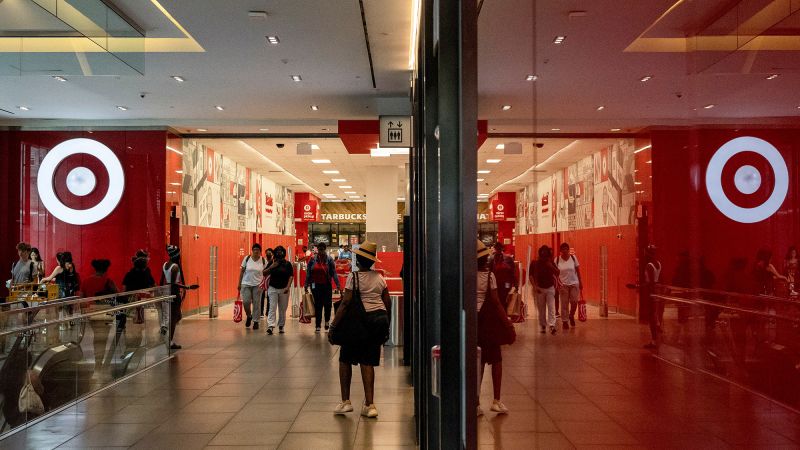
Target is in trouble. And while it’s easy to get lost in the company’s recent (poor) handling of American culture war narratives that cast it as too “woke” or too willing to cave to online fascists, the root of Target’s problems runs deep.
Don’t get me wrong – the massive consumer boycotts from Black organizers have done damage. And there are probably folks on the far right who think even Target’s toned-down, overwhelmingly beige Pride merch this year was still too loud.
But its stock is in the gutter, and sales have been falling for two years because of good ol’ business fundamentals. It overstocked. It lost the pulse of its customers. It went up against Amazon Prime with… actually, does anyone know what Target’s Amazon Prime competitor is called?
Plus the boycotts. Plus the joy-less Pride garb.
Now, investors have another wrinkle to consider. On Wednesday, Target replaced its CEO of 11 years, Brian Cornell — a shakeup that was widely expected and likely overdue. Taking his place to steer the brand out of its malaise is … Cornell’s right-hand man.
The brand we petite bourgeoisie once playfully referred to as Tar-zhay has lost its spark. The company reported a decline in sales for a third straight quarter, part of a broader trend of falling or flat sales for two years. Employees have lost confidence in the company’s direction. And 2025 has been a particularly rough financially, as Black shoppers organized a boycott over Target’s decision to cave to right-wing pressure on diverse hiring goals.
Shares fell 10% in early trading.
It’s not to say the new guy, Michael Fiddelke, is unqualified. He’s been at Target since he started as an intern more than 20 years ago, after all. But Wall Street is clearly concerned that Target’s leadership is underestimating the severity of the need for a significant change— just as President Trump’s tariffs on imported goods threaten the entire retail industry.
Appointing a company lifer “does not necessarily remedy the problems of entrenched groupthink and the inward-looking mindset that have plagued Target for years,” Neil Saunders, an analyst at GlobalData Retail, said in a note to clients Wednesday.
In its 2010s heyday, Target became a go-to for consumers who liked a bargain but didn’t necessarily like bargain-hunting. The shelves felt well-curated. You’d go to Target because it had one thing you needed and 12 things you didn’t know you needed. It was stocked with Millennial cringe long before Gen Z gave us the term Millennial cringe.
Target’s sales held strong through the pandemic as remote workers set up home offices and stocked up on essentials. Months of lockdown also benefited the store as people began refreshing their spaces because they didn’t really have much else to do and they were staring at the same walls all the time.
But things began to falter in 2022. Target over-ordered and wound up with a glut of unsold inventory, just as generationally high inflation was making things more expensive. As Covid subsided, consumer spending shifted to experiences. Taylor Swift was on tour and everyone wanted to take a vacation or make up for the bachelorette weekends we’d missed during lockdown.
Meanwhile, Target and other retailers began locking up products behind Plexiglass, claiming a scourge of shoplifting was to blame for disappointing profits — a cry that didn’t always hold up to scrutiny. Locking up necessities has backfired in almost every way, annoying customers and burdening employees, yet Cornell stood by the decision and claimed on an earnings call that customers were actually grateful for the inconvenience.
Cornell’s misplaced optimism about locking up shampoo was an early indication Target’s management might have lost touch with its customers’ lived experience.
Perhaps the biggest strategic misstep by Target came in January, when it joined a crush of American companies in dropping its diversity, equity and inclusion goals — a move that landed like a slap in the face to Target’s more-progressive and racially diverse customer base.
“When Black people understood that we spend $12 million a day at Target … people begin to have the light bulb go off and say, I can’t spend my dollars where I’m not getting dignity,” the Rev. Jamal Bryant, who led a boycott against Target, told CNN on Wednesday. “We felt like it was a stark betrayal.”
The boycott worked. Target’s sales and foot traffic have suffered even as rivals like Walmart, Amazon and Costco have thrived.
It’s not just Target — other companies that have attempted to change the very idea of who they are have suffered the consequences.
McDonald’s and Pizza Hut are both trying to win customers back as they balk at $18 combo meals (in McD’s case) and seek out better deals from rivals (in the Hut’s case).
Southwest Airlines is practically unrecognizable today as it ditches all the things — like open seating and zero baggage or change fees — that made it distinct from rivals.
Another brand in crisis is MSNBC. The news channel said this week it is rebranding itself as MS NOW, or My Source News Opinion World, for reasons beyond grammatical understanding.
Target doesn’t seem to know whether it can revive its Tar-zhay magic or whether it morphs into something else.
“It’s unclear what they represent,” wrote Jamie Meyers, senior analyst at Laffer Tengler Investments, in a note Wednesday. “They’re not an office retailer, a low-budget chain, a dollar store or a direct competitor to Walmart or Amazon.”
[ad_2]
Source link
